PROFILE
FR |
L’agence d’architecture et d’urbanisme OUALALOU+CHOI revendique le projet architectural comme modalité de négociation de situations complexes, ambiguës et étrangères.
Fondée par Linna Choi et Tarik Oualalou, l’agence O+C s'est construite autour de projets d'une grande diversité de programmes, de sites et d'échelles, qui sont autant d'investigations cherchant à définir dans une pratique des limites, les limites de la pratique. Convaincue que l’invention ne se situe pas toujours dans le périmètre conventionnel d’intervention de l’architecte, la composition multiculturelle et pluridisciplinaire de l'agence lui permet un échange robuste et pertinent entre les cultures, les méthodes et les contextes.
Cet engagement donne aux architectures traitées par l’agence une profondeur qui marque la volonté d’inscrire de manière durable des éléments dans le territoire. Au-delà de sa valeur d’usage, de sa puissance esthétique et de la nécessité de construire avec responsabilité, l’architecture est pour l’agence une exploration de l’intangible et de l’immatériel.
Parmi les réalisations les plus significatives de O+C on trouve le Musée Volubilis le Centre Culturel du Maroc à Paris, le Village COP22 des Nations Unies, le Campus pour la Réunion Annuelle de la Banque Mondiale et du FMI à Marrakech, le Pavillon du Maroc pour l'EXPO 2020 de Dubaï, et la tente FLIJ construite sur le parvis de l'Institut du Monde Arabe à Paris.
Avec des bureaux à Paris et à Casablanca, les projets actuels de O+C comprennent le Grand Stade Hassan II pour la Coupe du Monde 2030, qui deviendra le plus grand stade du monde avec une capacité de 115 000 places ; la gare de Casablanca Sud, appelée à devenir la deuxième gare de train à grande vitesse de Casablanca ; le futur siège de Saham Bank à Casablanca, d’une superficie de 27 000 m² ; ainsi que la rénovation de l’historique Hôtel Lincoln, situé au cœur de Casablanca.
Plusieurs expositions ont montré l’œuvre de O+C, notamment à Paris, Casablanca, Londres et Copenhague.
Une monographie a été publiée en 2017, "Territoires de Désobéissance", retraçant les quinze dernières années de l'agence.
ENG |
The architecture and urban design practice of OUALALOU+CHOI considers the architectural project as a means of negotiating complex situations, however foreign or obscure.
Founded by Linna Choi and Tarik Oualalou, the office’s work exhibits a wide range of scales, typologies, and contexts that serve as investigations as much about exploring given project constraints as about questioning the limits of the design profession. Adamant that architectural strategies should be integrated into a project long before and after the conventional intervention of architects, the studio’s international and multidisciplinary composition enables it to forge meaningful relationships within client and project teams, creating a dialogue that respects and examines cultures, customs and methods employed, in order to achieve a stronger design solution.
Such a commitment gives rise to the office’s ability to create an insightful, relevant, and poetic architecture, one marked by its volition to contribute enduring designs for our land, city, and waterscapes. Going beyond the mere topics of form and function, the architecture sought by O+C is as immaterial as it is meaningful.
The practice’s most significant works include the Volubilis Museum, the Cultural Center of Morocco in Paris, the United Nations COP22 Village, the Campus for the World Bank/IMF Annual Meeting in Marrakech, the Morocco Pavilion for EXPO 2020 Dubai, and the FLIJ tent constructed on the plaza of the Arab World Institute in Paris.
With offices in Paris and Casablanca,O+C’s current projects include the Grand Stade de Hassan II for the World Cup 2030, the future largest stadium in the world with 115 000 seats, the South Casablanca station, soon to become the second high-speed train station in Casablanca, the future 27 000m² Saham Bank Headquarters in Casablanca, and the renovation of the historic Lincoln Hotel in the heart of Casablanca.
Numerous exhibitions have showcased the studio’s work, most recently in Paris, Casablanca, London, and Copenhagen.
In 2017, O+C published a monograph, “Territories of Disobedience,” which critically examines a body of work spanning more than fifteen years.
DISCOVER OUR PARTNERS
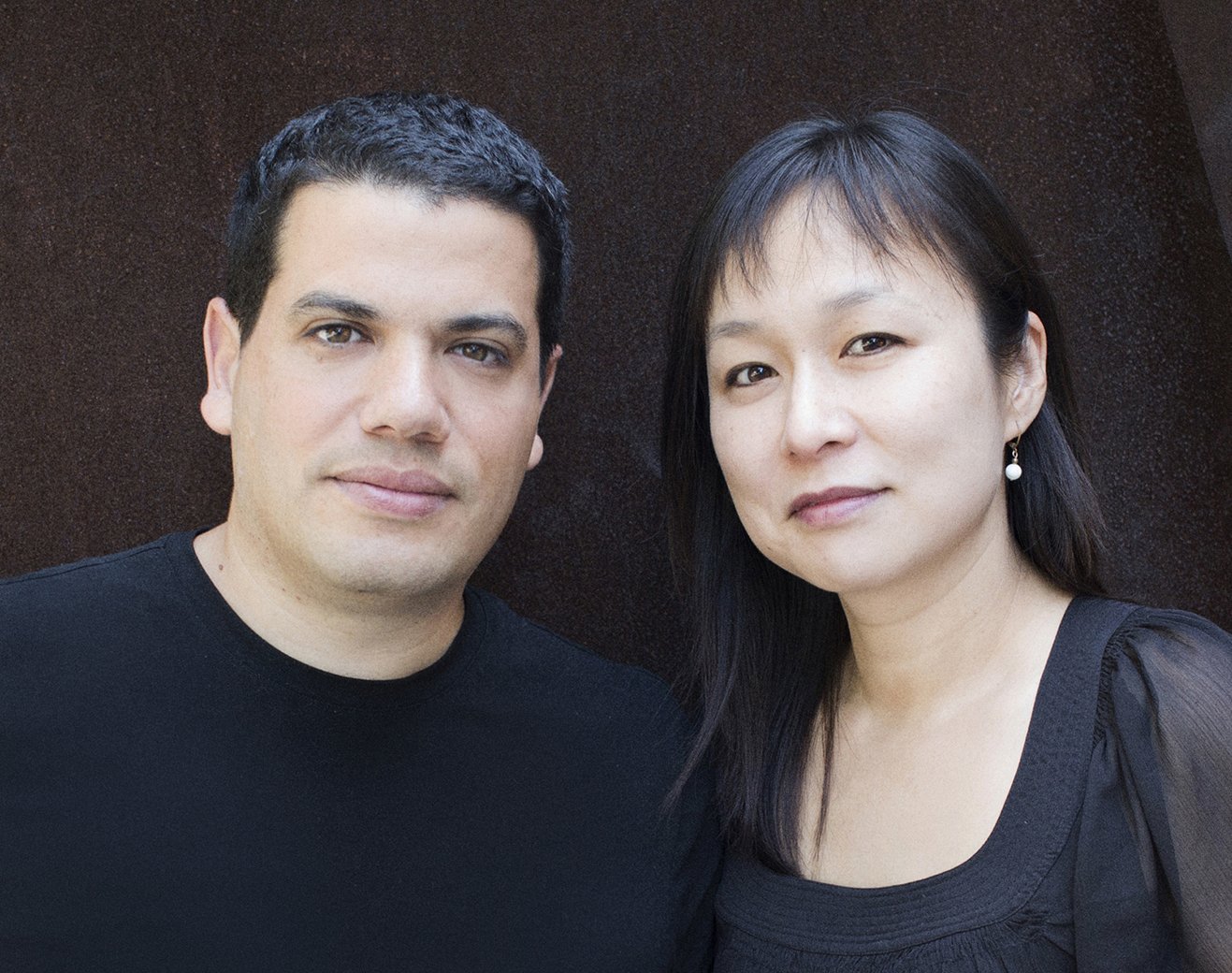
Tarik Oualalou
Morocco & France
FR |
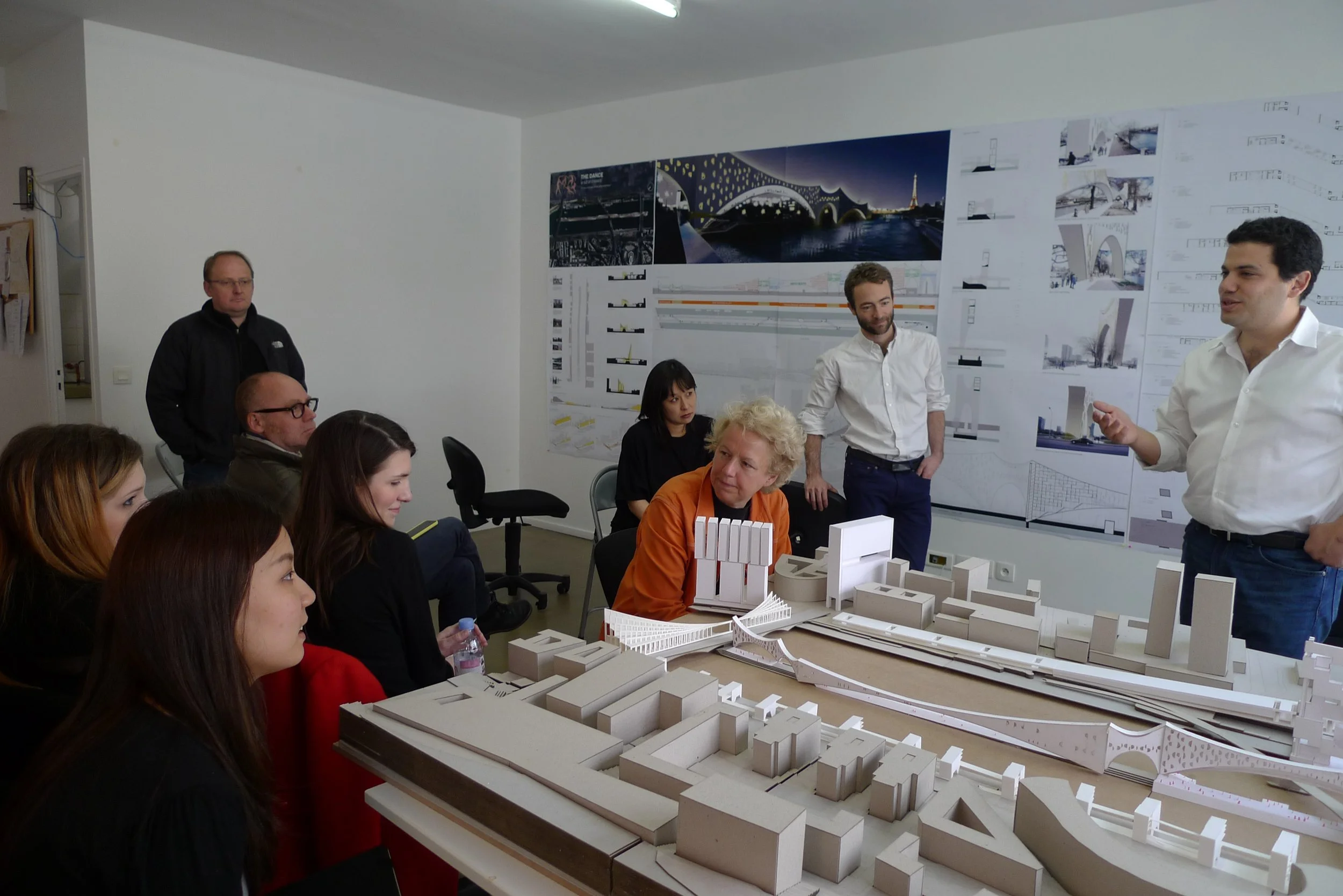
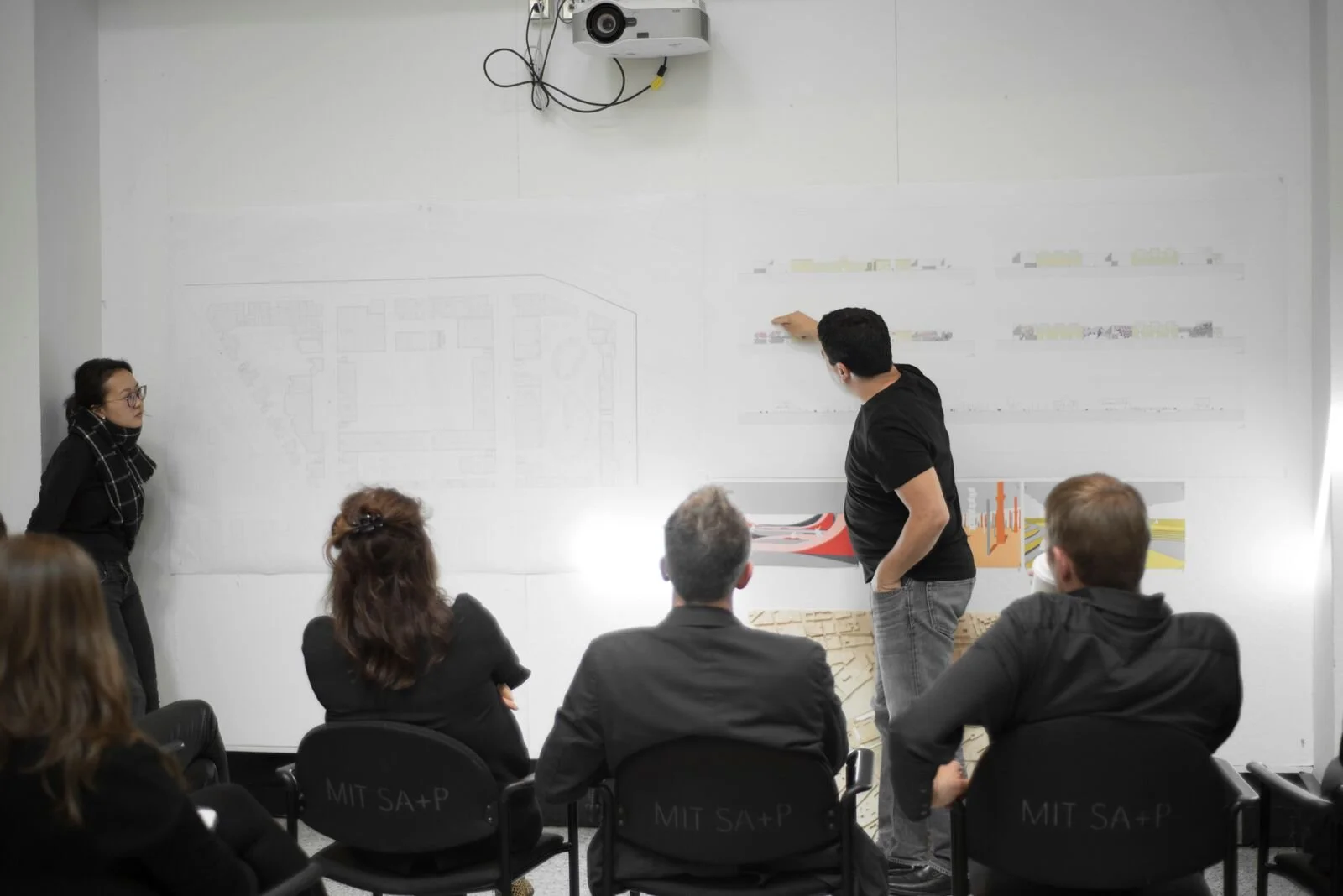
Tarik Oualalou est Architecte et Fondateur avec Linna Choi de l’agence OUALALOU + CHOI. Il est diplômé en Architecture de l’Ecole Nationale Supérieure d’Architecture Paris Malaquais et du Rhode Island School of Design, et a reçu des diplômes en Art et Histoire de l’architecture de l’Ecole du Louvre et en Ingénierie de l’Ecole Nationale des Arts et Métiers de Paris. Récipient de nombreux prix d’architecture et de design, Tarik est également enseignant d’architecture, ayant mené des studios à plusieurs universités de renommée : Rice University, MIT, American School at Fontainebleau, Rhode Island School of Design, Ecole Spéciale d’Architecture.
ENG |
Tarik Oualalou is a Design Principal and Founding Partner at OUALALOU + CHOI. He has been a visiting architectural critic at the Rhode Island School of Design, Ecole d’Architecture Nationale Rabat, MIT School of Architecture, Ecole Nationale Supérieur d’Architecture Paris Malaquais, and Fontainebleau American School. Tarik holds degrees in Architecture from the Ecole d’Architecture Paris Malaquais, in Art History from the Ecole du Louvre, and in Civil Engineering from the Conservatoire National des Arts et Métiers in Paris.
Linna Choi
USA & S.Korea
FR |
Linna Choi est Architecte et Fondatrice avec Tarik Oualalou de l’agence OUALALOU + CHOI. Elle est diplômée en Architecture de Yale Université et de Harvard University Graduate School of Design. Récompensée par de nombreux prix d’architecture et de design, Linna est également enseignante et critique d’architecture, ayant été invitée par de nombreuses écoles telles MIT School of Architecture, Rhode Island School of Design, Rice University Paris Program et Università Iuav di Venezia School of Architecture. Elle est inscrite à l’Ordre des Architectes de l’Etat de New York aux Etats-Unis.
ENG |
Linna Choi is a Design Principal and Founding Partner at OUALALOU + CHOI. She has served as a visiting architectural critic at the MIT School of Architecture, Rhode Island School of Design, Rice School of Architecture Paris, and Università Iuav di Venezia School of Architecture. The recipient of several prestigious architecture and design awards, Linna holds a Masters Degree in Architecture from Harvard University’s Graduate School of Design and a Bachelor of Arts degree in Architecture from Yale University. She is a registered architect in the State of New York.
HONORS & AWARDS
2025
The Moroccan Pavilion for the Dubaï Expo 2020 was shortlisted for the 2025 Aga Khan Award for Architecture
2022
Prix Arab Architects | Arab Architects Award
2018
Finalist, The PLAN Award (Livre Paris & COP 22) | Finalist, BSI Swiss Architectural Award
2017
Curator of “Décrypter le Panthéon” as part of the Fête Nationale events, commissioned by the Centre des Monuments Nationaux
2016
Finalist, BSA Swiss Architectural Award
2015
Rice Design Alliance Spotlight Prize | Archmarathon Prize | In/Arch Award “The Architectures of Expo 2015” | 100 Architects of the Year, Korean Institute of Architects
2014
Finalist, Grand Prix AFEX (Volubilis Museum) | Curator of first-ever Morocco Pavilion at Venice Biennale
2013
Presidency of FADA (Foundation for Art, Design, and Architecture)
2012
Young Arab Architects Award
2010
MIPIM Future Architecture Award | World Architecture Award
2009
Nominated, Aga Khan Award | AR Emerging Architecture Award | Curator of Casablanca Biennale for Art and Architecture
PRESENTATIONS & LECTURES
2025
Faire un stade à Casablanca, Casamémoire, Casablanca
2025
Le stade Hassan II, une aarchitecture inspirée du passé et tournée vers l'avenir, Science Week 2025, Benguérir
2023
Des Climats, des tribus et des corp, Cité Architecture et Patrimoine, Paris
2023
“The Architecture of collapse-of climates, tribes and bodies” at American University of Beirut | “Des Climats, des tribus et des corps” at Cité Architecture et Patrimoine in Paris
2021
Sommet Afrique-France - Montpellier
2019
Des Climats, Des Tribus et Des Corps | ENSA Nantes, Maison Régionale de l'Architecture des Pays de la Loire
2018
“Casablanca Transformations Urbaines” at l’Institut français de Casablanca | Invited lecturer at CENTER FOR ARCHITECTURE -- AIA NYC | “Inhabiting Africa: the future of African Cities” conference at UM6P, Ben Guerir | “Territories of Disobedience” lecture at the Université Internationale de Rabat, the Ecole Nationale d’Architecture de Tétouan, the Ecole d’Architecture et de Paysage de Casablanca | Presentation of the new Cultural Center of Morocco in Paris at ZAK World of Façades Casablanca | Presentation of the new City of Mazagan at MIPIM
2017
Presentation of “Territories of Disobedience” at Librairie VOLUME in Paris | “Keeping our Capitals Moving” conference at World Architecture News event in Birmingham | Digital Vernacular conference at UIA Seoul World Architects Congress | “Invisible Cities” lecture at TEDx Talks Rome | Invited lecturer at Massachusetts Institute of Technology (MIT) | Presentation of “Territories of Disobedience” at la galerie d’architecture in Paris | “Retour d’expérience, les COP21/22” at the Institut du Monde Arabe in Paris
2016
Charles & Ray Eames guest lecturer at the University of Michigan | Presentation of “State of Grace” at Columbia University Global Centers Paris location | “Singularité” lecture at the Ecole d’Architecture de Paris Belleville | “News from the front” conference at SILENCIO Paris
2015
Presentation of “Plan B Système D” as part of “les Mercredis d’AS” in Paris | “Plan B” lecture at IUAV in Venice | Rice Design Alliance Spotlight Prize lecture | “Terre à terre” conference at Ecole d’Architecture et de Paysage de Casablanca | “L’architecture du Maroc” conference at the Institut du Monde Arabe in Paris
2013
“Relevance and Necessity” lecture at Paris-Sorbonne
2012
“Urbanism is a Martial Art” presentation at Venice Biennale
2011
Presentation of “ESCALES” at the Institut Français de Casablanca and la galerie d’architecture in Paris | “Our tradition: modernity'“ conference at the Alliance Française in New York
PUBLICATIONS
2023
Acclimatation L’Architecture d’Aujourd’hui, Hors-série n°46
2018
TOTALIZATION by Troy Schaum, interview (Park Books) | Wallpaper* Magazine — “Desert architecture: modern buildings in arid environments” (COP 22) | Arquitectura Viva’s AV proyectos series n° 085 (COP 22) | Design Indaba (“The Disappearing City According to O+C”) | Le courrier de l’architecte (2017 office highlights)
2019
Collective City (Seoul Biennale of Architecture and Urbanism official publication)
2017
Release of the monograph “Territories of Disobedience” (Actar) | ANCE l’industria della costruzioni n° 457 (3 projects from O+C) | “Maroc: A livre ouvert” (publication accompanying Honorary Pavilion at the LIVRE PARIS book fair)
2016
“Architecture du Maroc” n° 72 (O+C invited as Editor-in-Chief) | Architecture CREE collectors edition (office feature)
2015
“RESISTANCES & RESIGNATIONS: Architectures du Maroc 2004-2014” (AAM) | “FLIJ” (publication accompanying the FLIJ installation at the Institut du Monde Arabe in Paris) | Collectors’ edition of “L’Architecture d’Aujourd’hui” n° 408
2014
“FUNDAMENTALISM(s)” (publication accompanying the Morocco Pavilion at the Venice Biennale)
E X H I B I T I O N S
2023
“Built/Unbuilt/Unbuildable” exhibition at La Galerie d'Architecture, Paris
2021
Morocco Pavilion at the Dubai World Expo 2021
2019
Casablanca: Void Transformations (Seoul Biennale of Architecture and Urbanism)
2017
“Décrypter le Panthéon” installation at the Panthéon, Paris | Honorary Pavilion at LIVRE PARIS book fair in Paris
2015
“Le Maroc contemporain” exhibition at the Institute du Monde Arabe in Paris | “15 ans de la galerie d’architecture” exhibition in Paris | Morocco Pavilion at EXPO 2015 in Milan
2014
Morocco Pavilion at the Venice Biennale | “Arab Contemporary” exhibition at the Louisiana Museum of Modern Art in Copenhagen
2012
Presentation of “Young Arab Architects Award” at the Venice Biennale | “HOME” Installation at Museum of Architecture in London
2011
“ESCALES” retrospective exhibition at la galerie d’architecture in Paris at the Institut français de Casablanca
2009
“Les abattoirs” installation at the “Transculturelles des abattoirs” event in Casablanca
Massachusetts Institute of Technology (MIT) (studio)
Rhode Island School of Design (studio)
Ecole Nationale Supérieure d’Architecture de Paris Malaquais (studio)
Ecole Nationale d’Architecture de Rabat (studio)
Boston Architectural Center (studio)
University of the Middle East (consultant)
Ecole Spéciale d’Architecture (studio)
Rice University (studio)
Harvard University (Career Discovery Program)
IE University Segovia Architecture studio
Venice IAUV University Architecture studio
Fontainebleau American School (studio)
TEACHING