NAD
Stade de Nador
Nador, MA
15 071m² - 20 000 places - Concours - non retenu
FR |
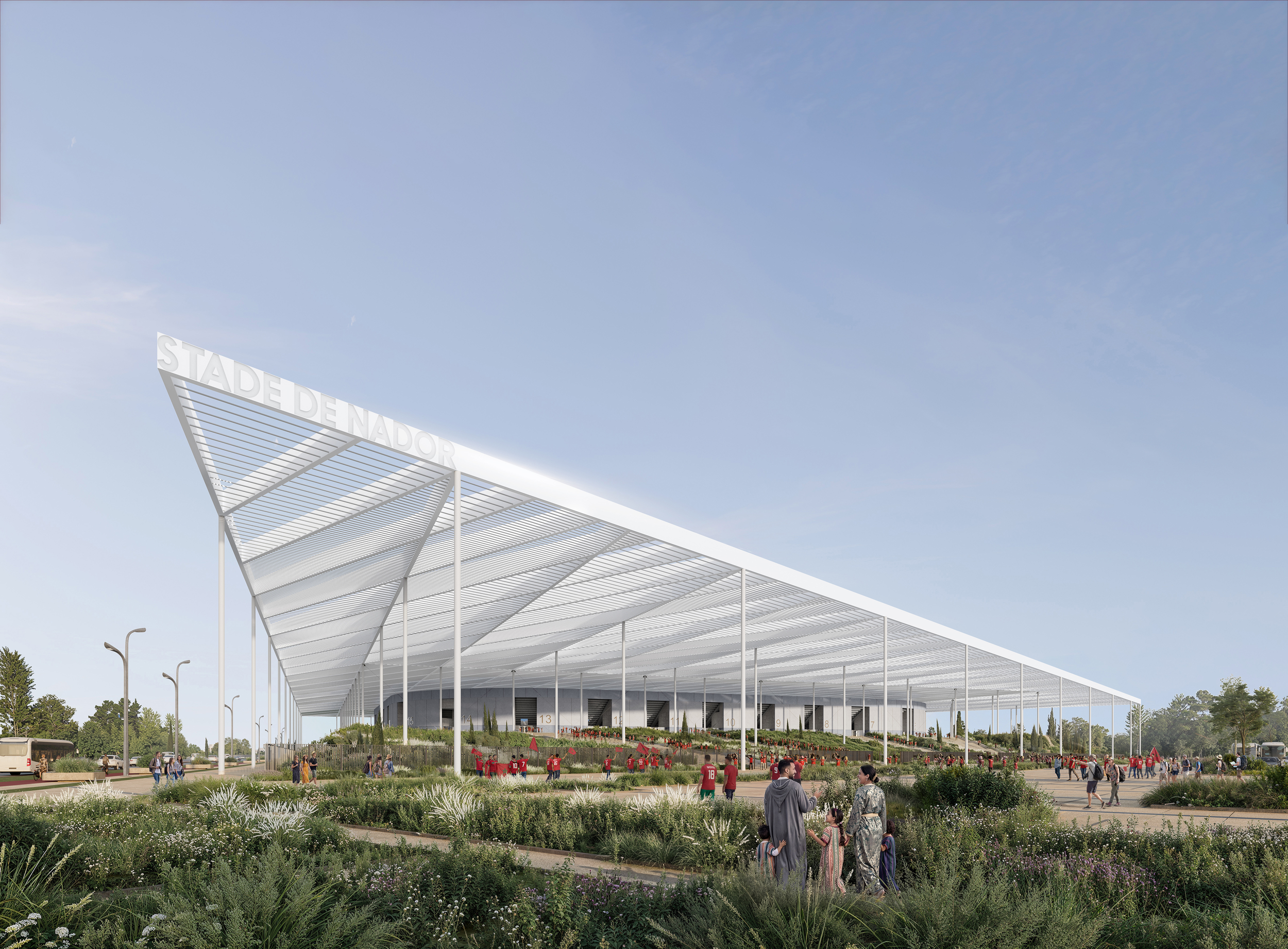
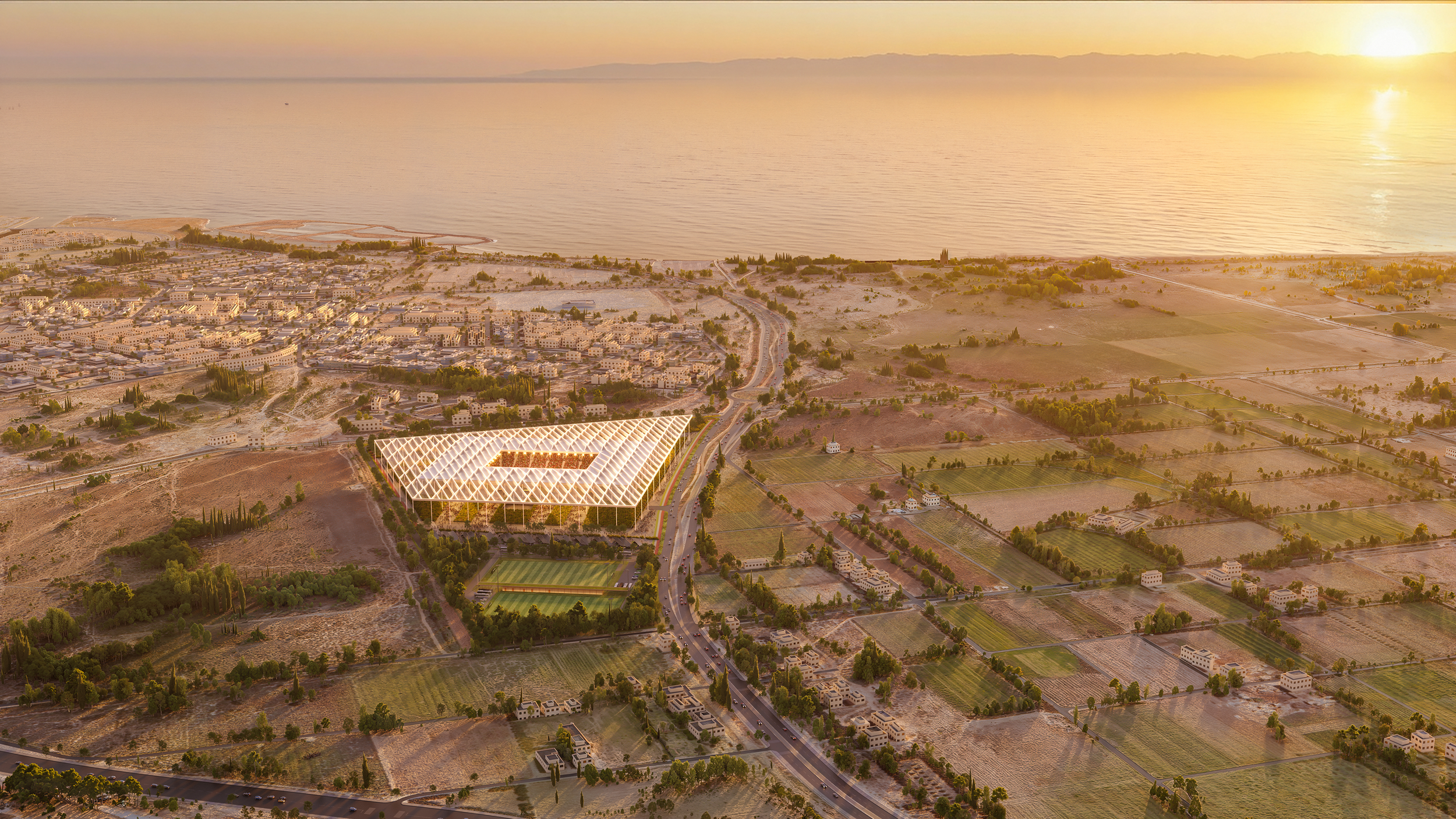
Nouveau repère à l’échelle du territoire, le stade de Nador affirme une présence à la fois puissante et légère dans son paysage. Protégé par une vaste canopée, pensée comme une véritable machine climatique, l’édifice redessine l’horizon urbain et dialogue avec la mer, la ville et les reliefs environnants.
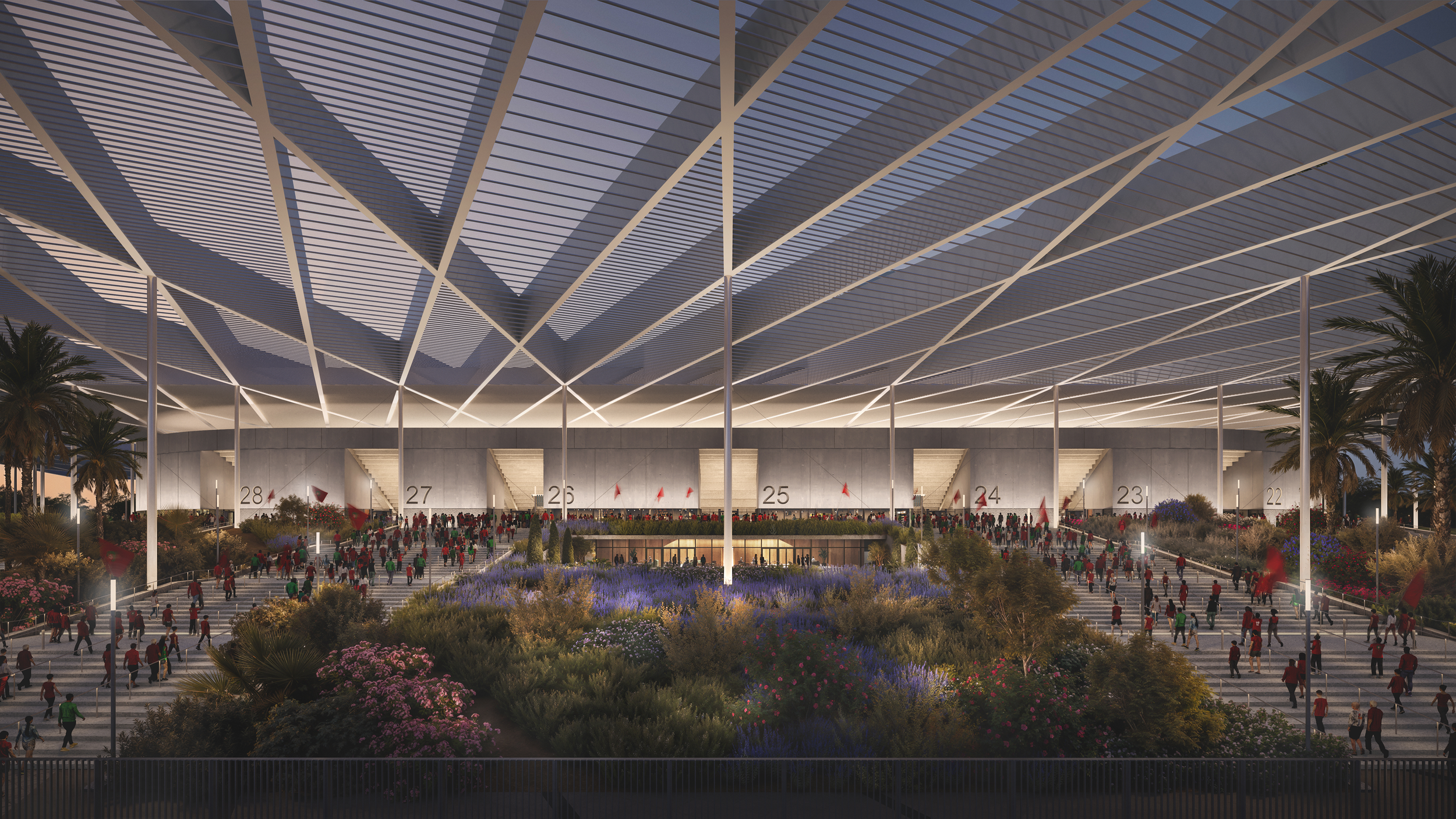
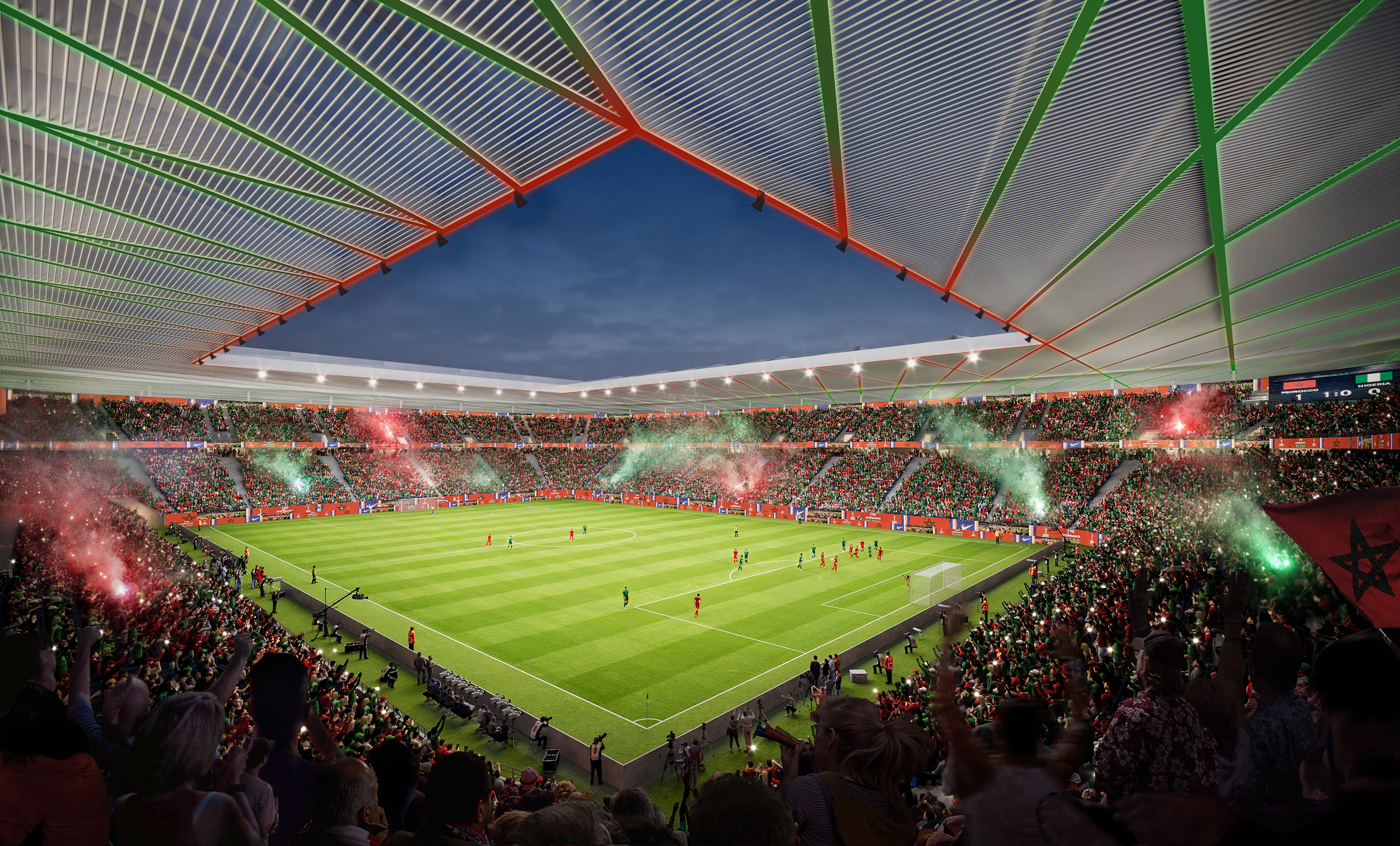
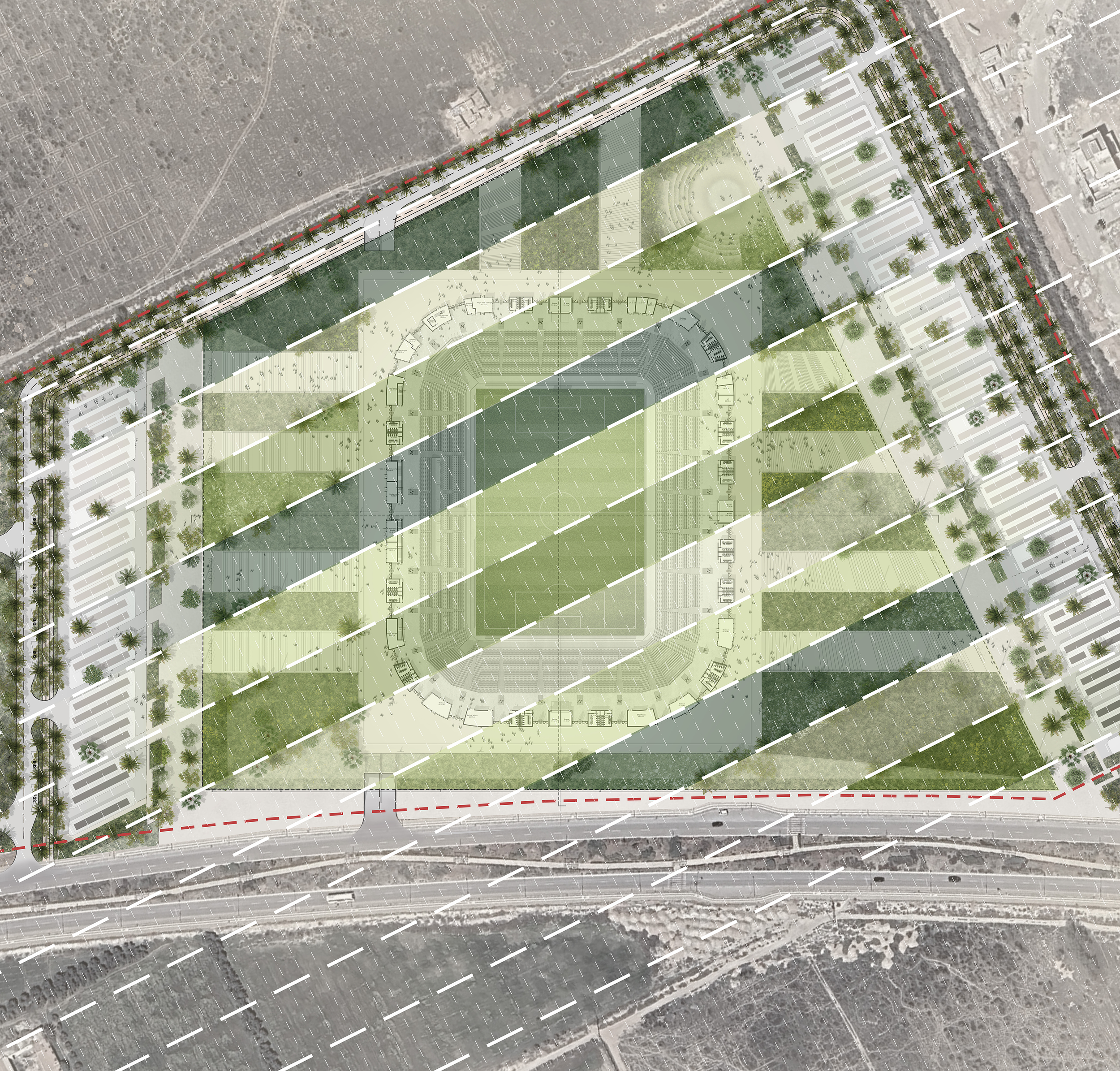
Plus qu’une couverture, la toiture constitue le geste fondateur du projet. Composée d’une structure métallique tridimensionnelle associée à des profils d’aluminium extrudés, elle agit comme une peau active : elle filtre la lumière, favorise la ventilation naturelle et génère des zones d’ombre adaptées aux différents usages. Le dispositif distingue des parties perméables, au-dessus des jardins, et des parties imperméables protégeant les gradins et l’esplanade. Une membrane intégrée participe à la régulation acoustique et accueille l’ensemble des équipements techniques autour de l’oculus central.
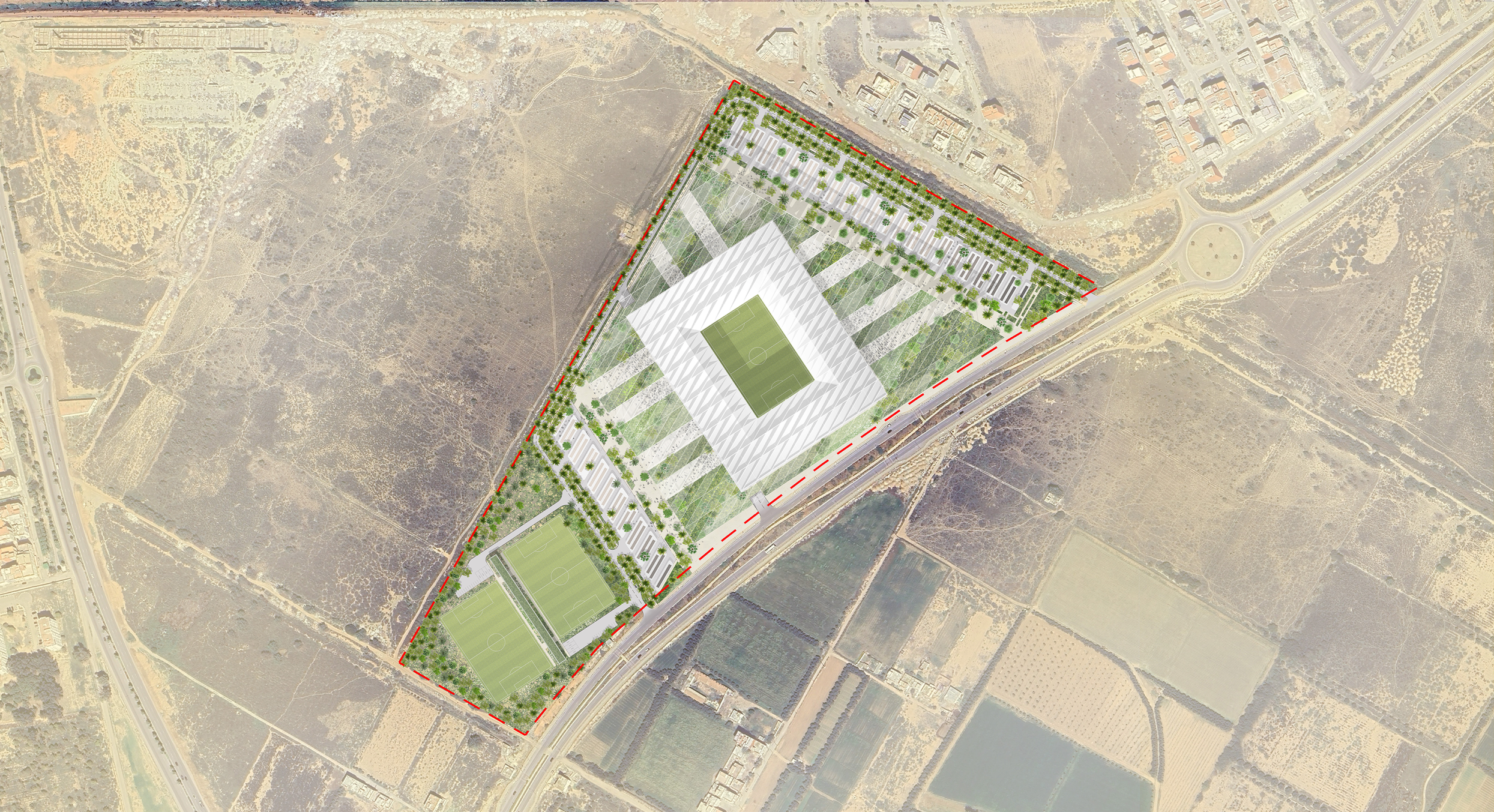
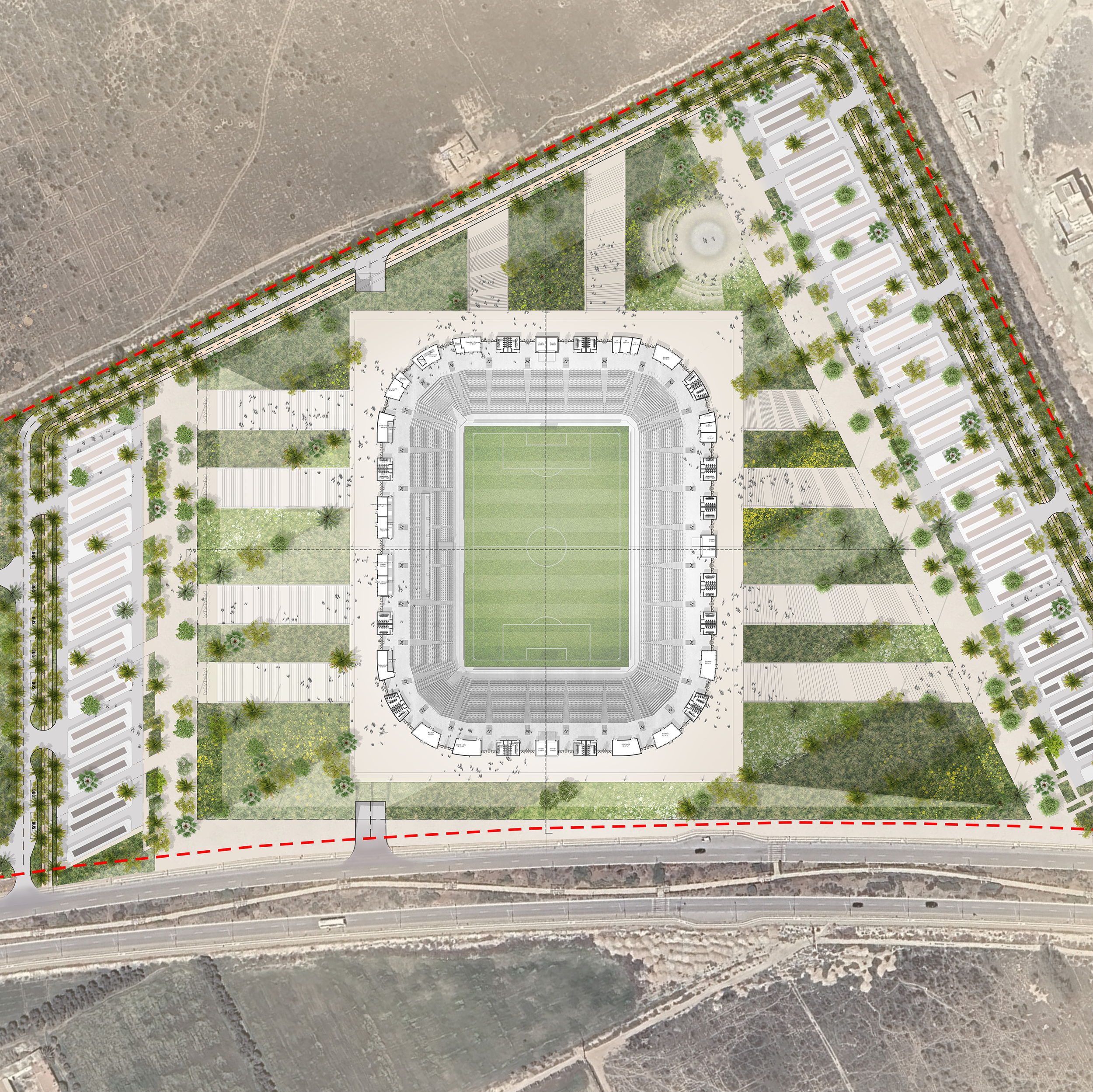
Implanté sur un promontoire paysager, le niveau principal de circulation est conçu comme une promenade architecturale. Il relie naturellement l’entrée aux tribunes à travers des espaces végétalisés, offrant des vues dégagées vers la mer au nord, les champs à l’est et au sud, et la ville et la montagne à l’ouest. Le stade s’inscrit ainsi dans une continuité territoriale, en rupture avec la monumentalité fermée traditionnellement associée aux enceintes sportives.
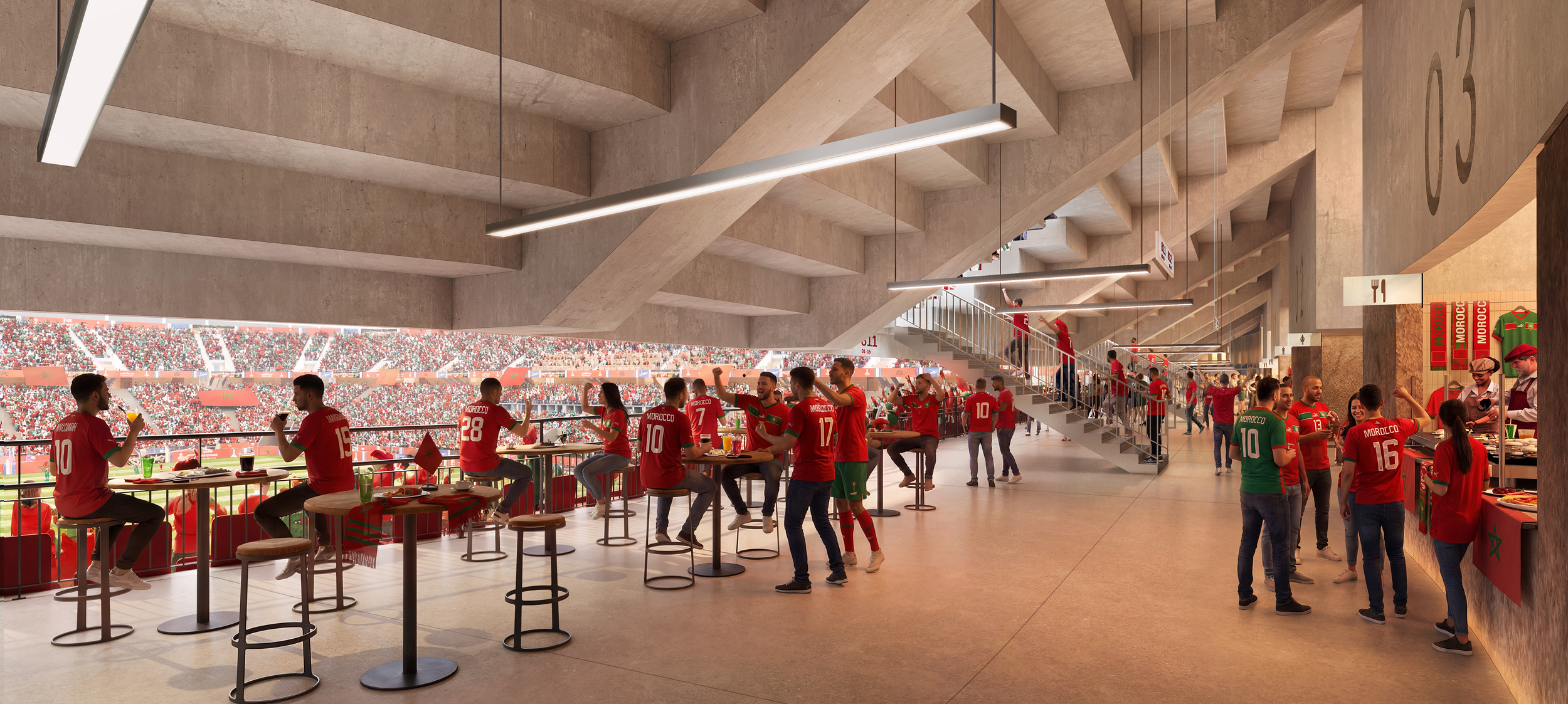
Pensé comme un fragment de paysage plutôt qu’un objet autonome, le stade dépasse la seule fonction sportive pour devenir un lieu de vie et de rassemblement. Inspirée par l’art du tissage marocain, sa maille architecturale réinterprète les motifs traditionnels à grande échelle et symbolise le lien entre les différents environnements que le projet articule : espace public, jardin, ville et territoire.
Architecture contemporaine, identité affirmée, performance climatique : le stade de Nador propose une nouvelle génération d’équipement sportif, ancrée dans son contexte et résolument tournée vers l’avenir.
NAD
Nador Stadium
Nador, MA
15 071m² - 20 000 seats - Competition - not selected
ENG |
A new landmark at the territorial scale, the Nador Stadium asserts a presence that is both powerful and light within its landscape. Sheltered beneath a vast canopy, conceived as a true climatic machine, the structure reshapes the urban skyline and engages in dialogue with the sea, the city, and the surrounding topography.
More than a simple cover, the roof constitutes the founding gesture of the project. Composed of a three-dimensional steel structure combined with extruded aluminum profiles, it acts as an active skin: filtering light, promoting natural ventilation, and generating shaded areas adapted to different uses. The system distinguishes between permeable sections above the gardens and impermeable areas protecting the stands and the esplanade. An integrated membrane contributes to acoustic regulation and accommodates all technical equipment around the central oculus.
Set on a landscaped promontory, the main circulation level is conceived as an architectural promenade. It naturally connects the entrance to the grandstands through planted spaces, offering open views toward the sea to the north, the fields to the east and south, and the city and mountains to the west. The stadium thus forms part of a broader territorial continuity, breaking away from the closed monumentality traditionally associated with sports arenas.
Conceived as a fragment of landscape rather than a standalone object, the stadium transcends its sole sporting function to become a place of life and gathering. Inspired by the art of Moroccan weaving, its architectural mesh reinterprets traditional patterns at a monumental scale and symbolizes the link between the different environments articulated by the project: public space, garden, city, and territory.
Contemporary architecture, affirmed identity, climatic performance: the Nador Stadium proposes a new generation of sports facility, rooted in its context and resolutely oriented toward the future.