GSH
Grand Stade Hassan II
Benslimane, MA
Stade Coupe du Monde FIFA 2030 - Capacité 115 000
FR |
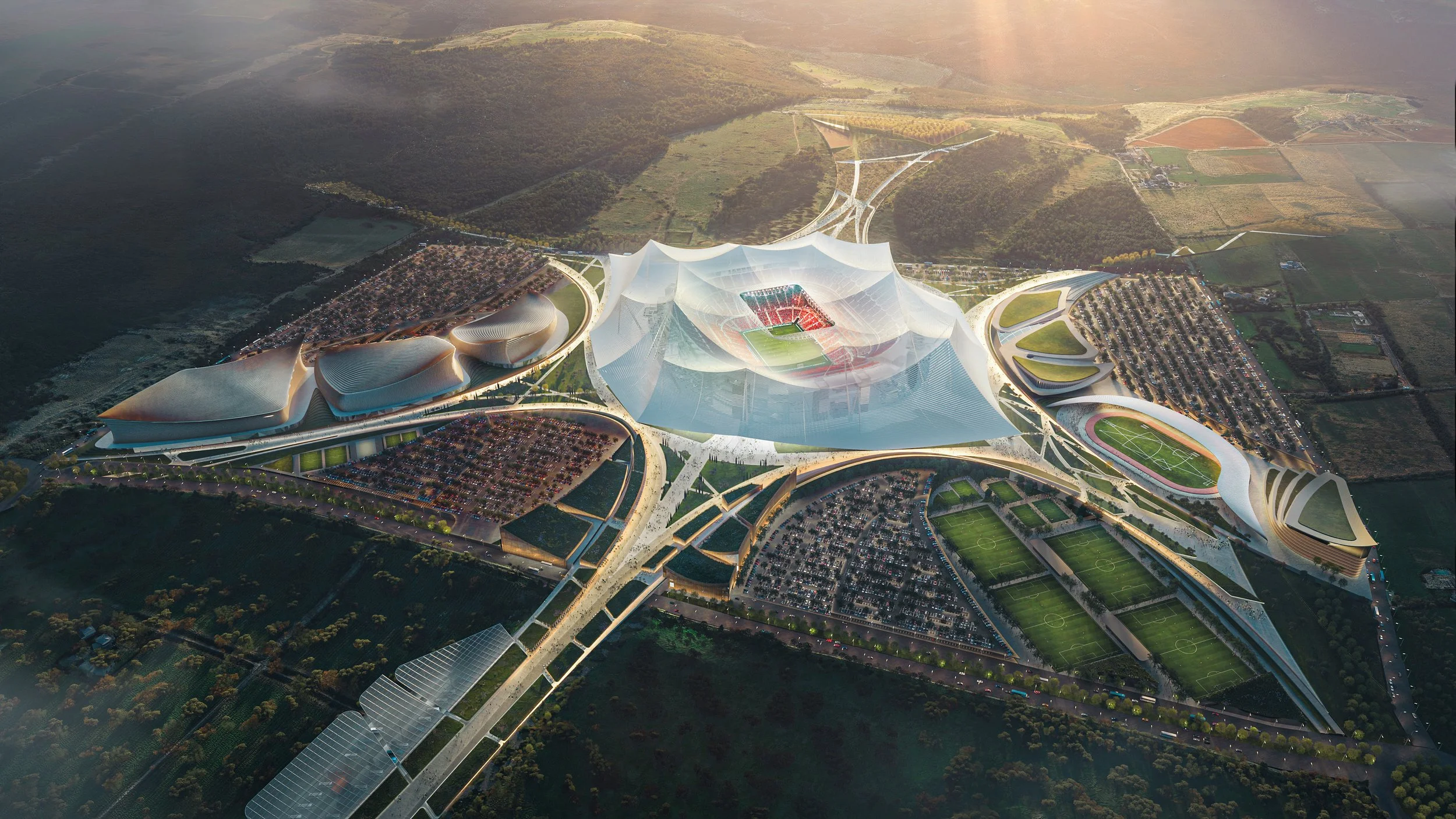
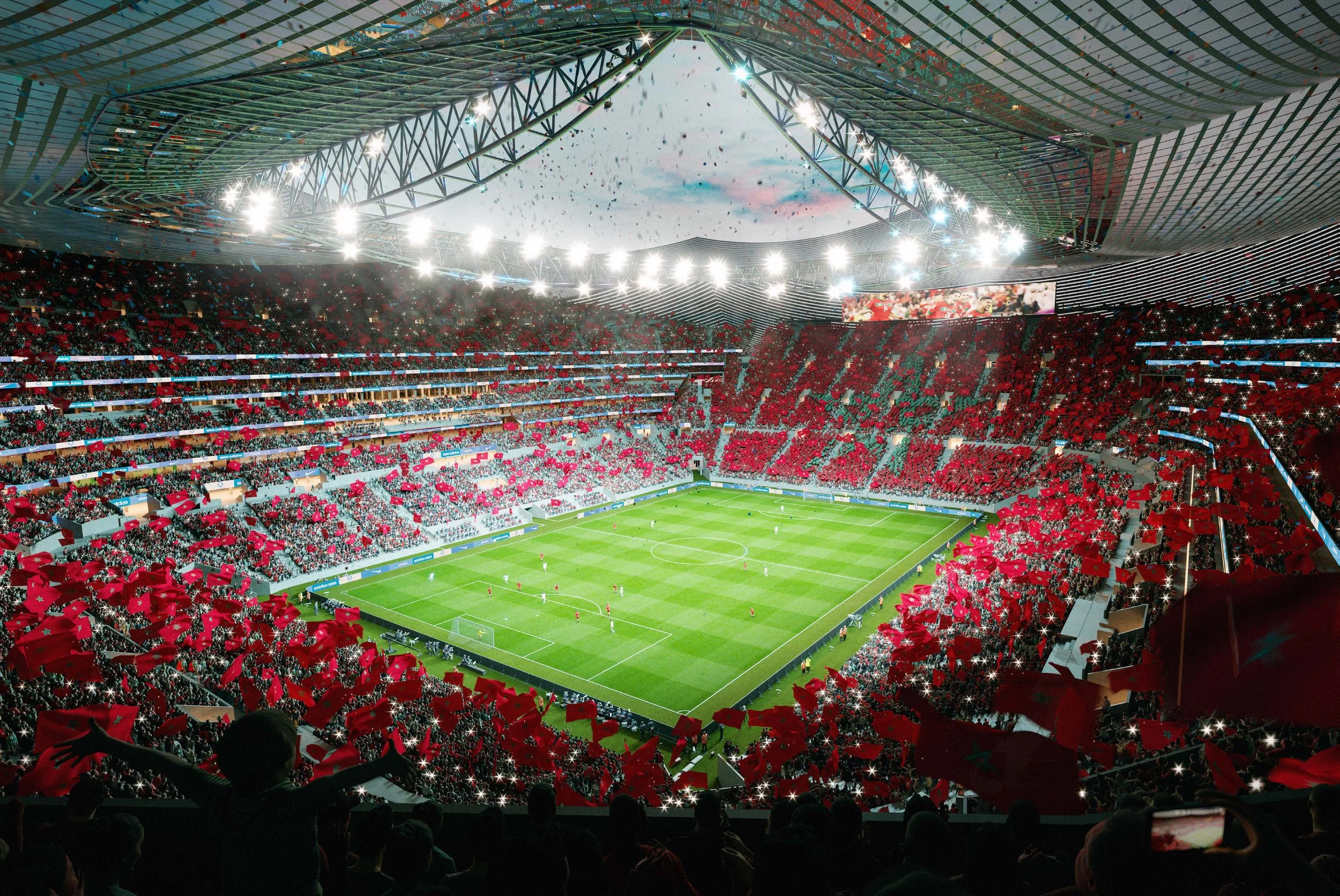
Le Grand stade Hassan II avec ses 115 000 places, se positionne comme le plus grand stade de football du monde.
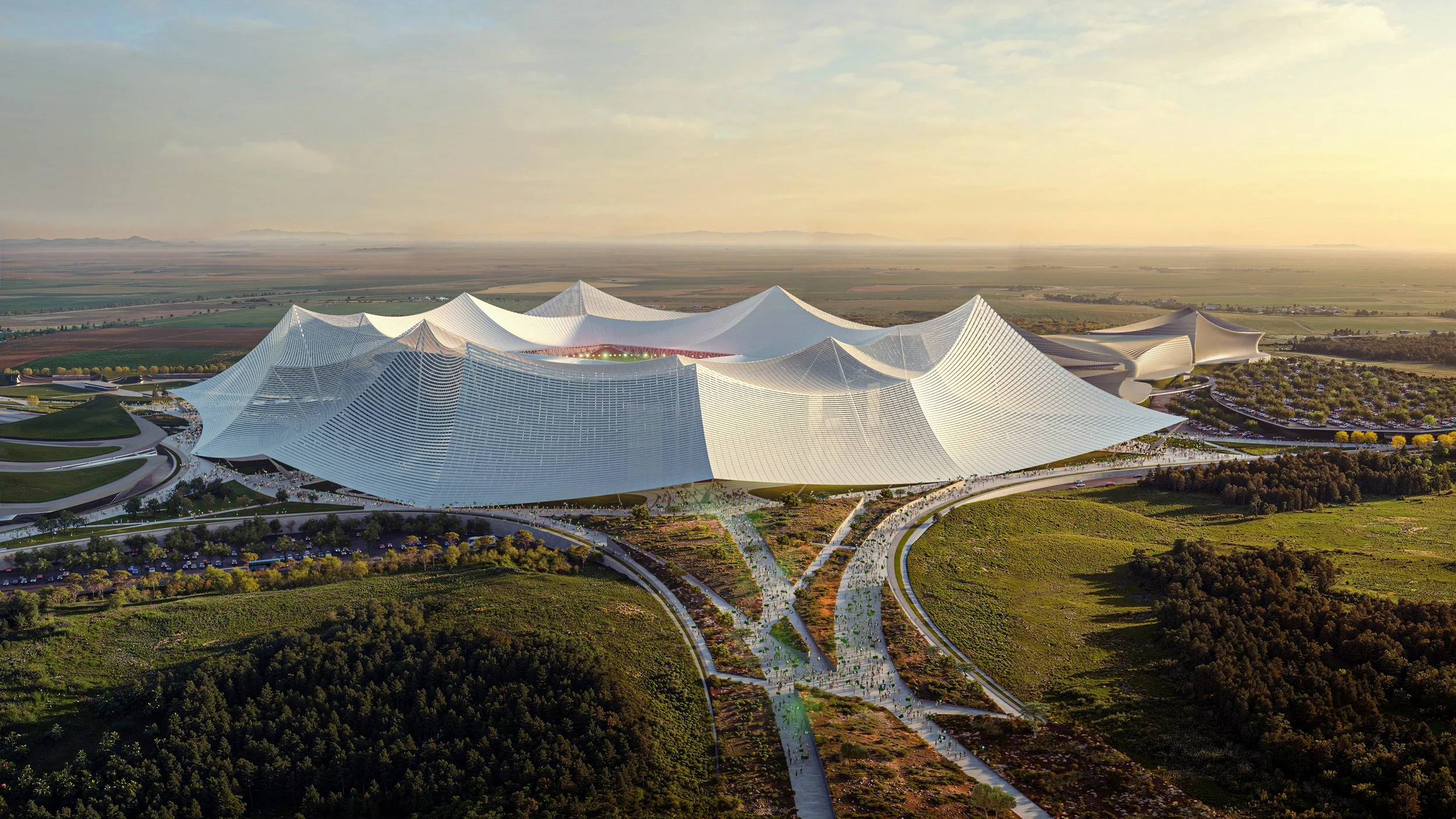
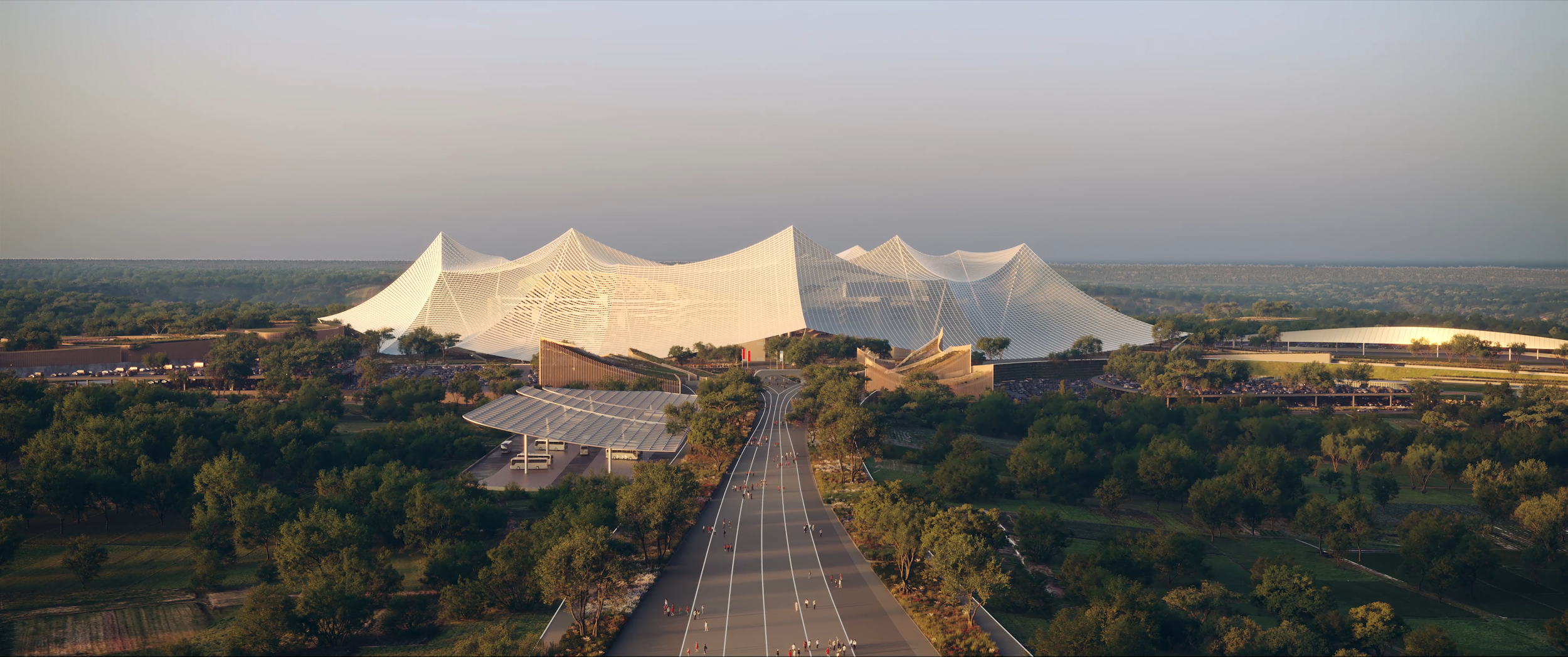
Le Grand Stade de Casablanca propose une architecture profondément inscrite dans son lieu et qui dialogue avec la Culture millénaire du Maroc. C’est une incarnation de la tradition de l’accueil et de l’hospitalité qui nous est si particulière. Il mobilise la notion du « Moussem », comme un haut-lieu des rassemblements festifs et utilise l’archétype de la tente, cette figure primordiale de l’architecture comme point de départ à l’invention d’une présence architecturale puissante et unique. Le Grand Stade est un bâtiment-paysage, ouvert, généreux et durable.
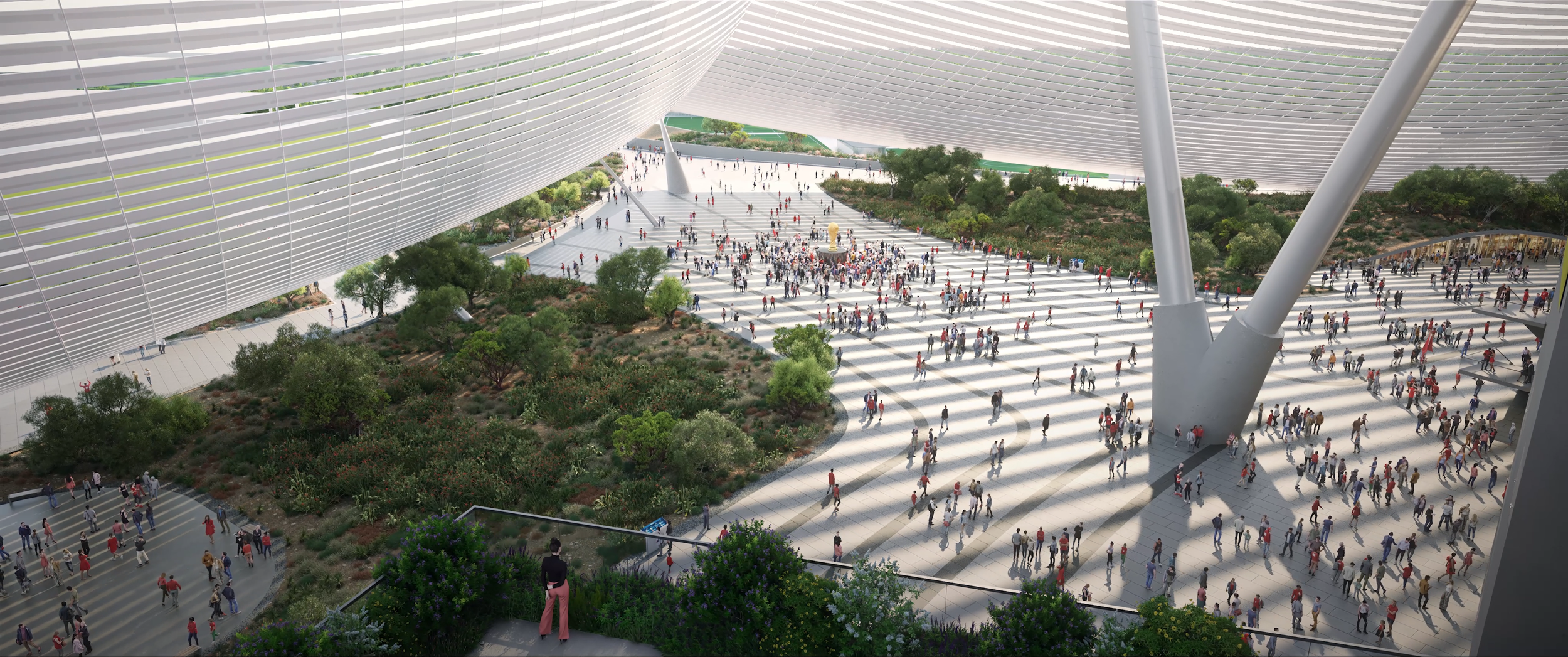
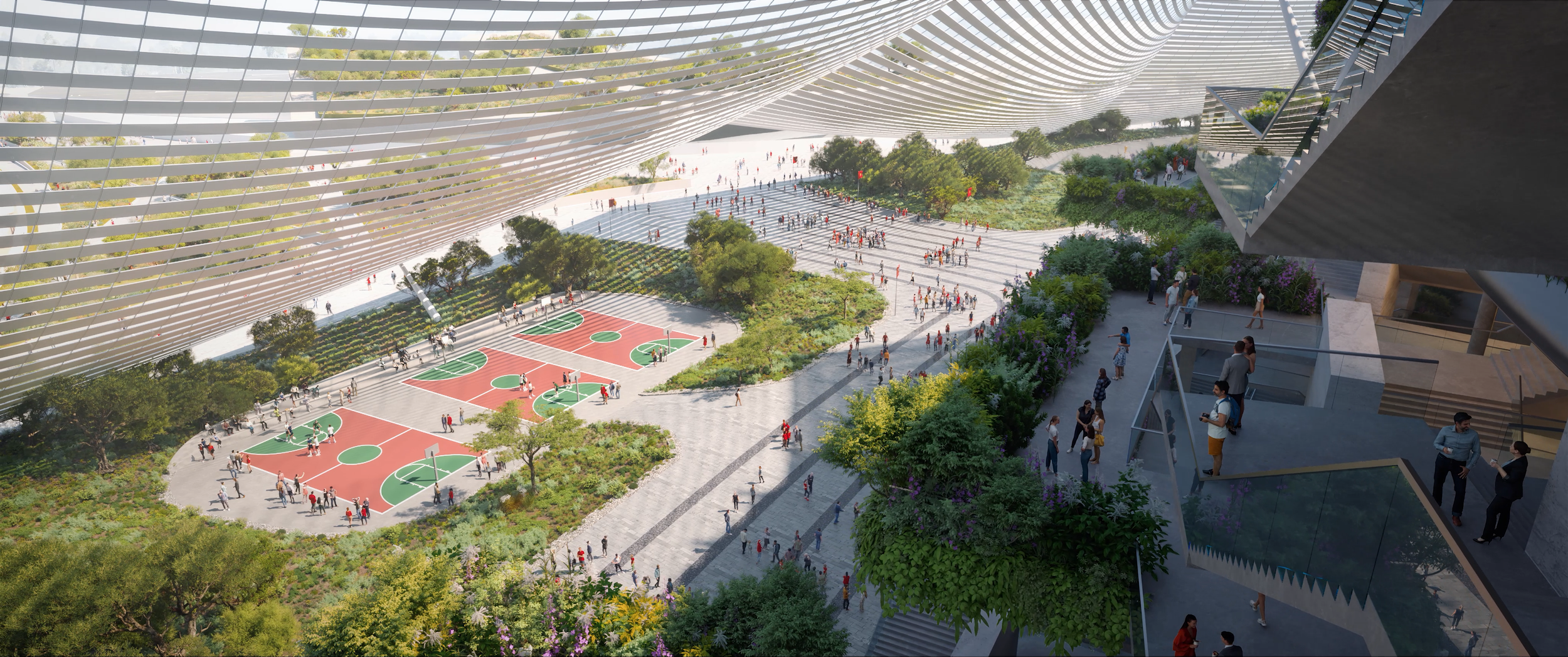
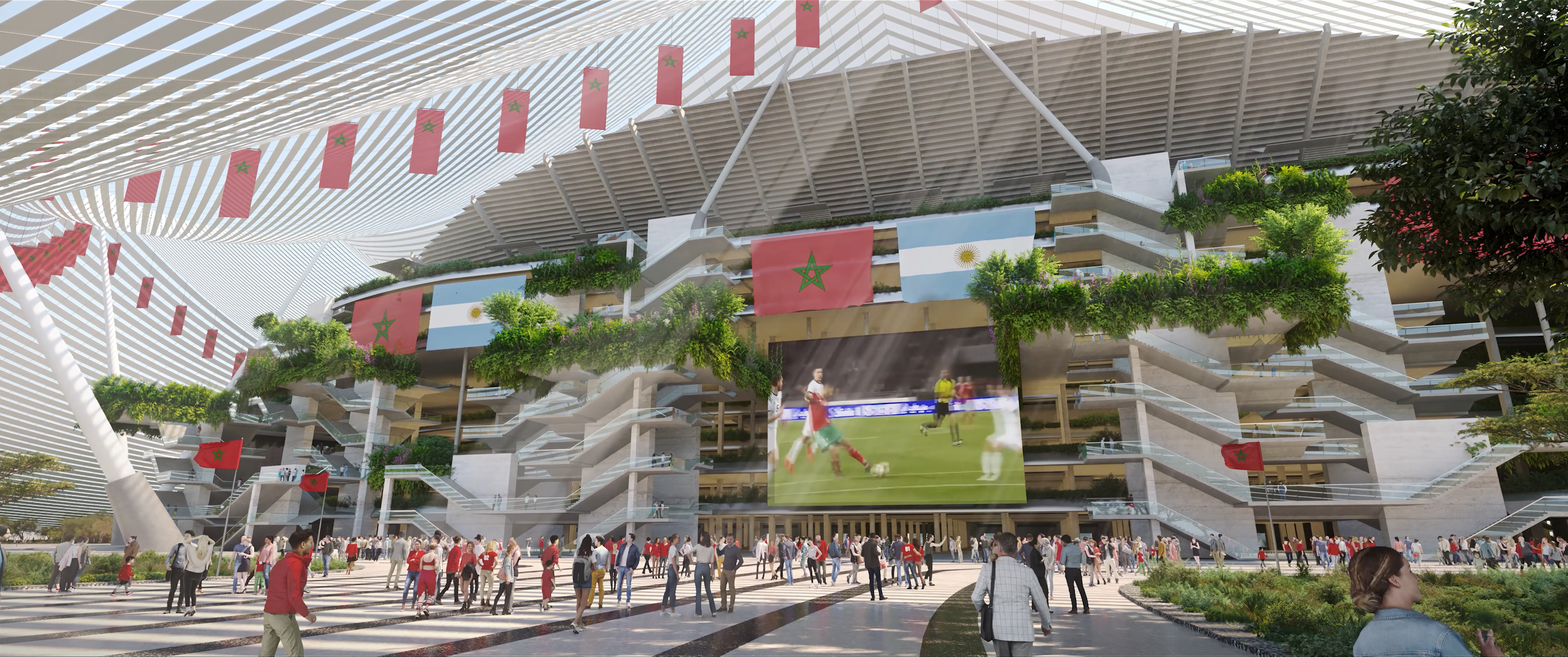
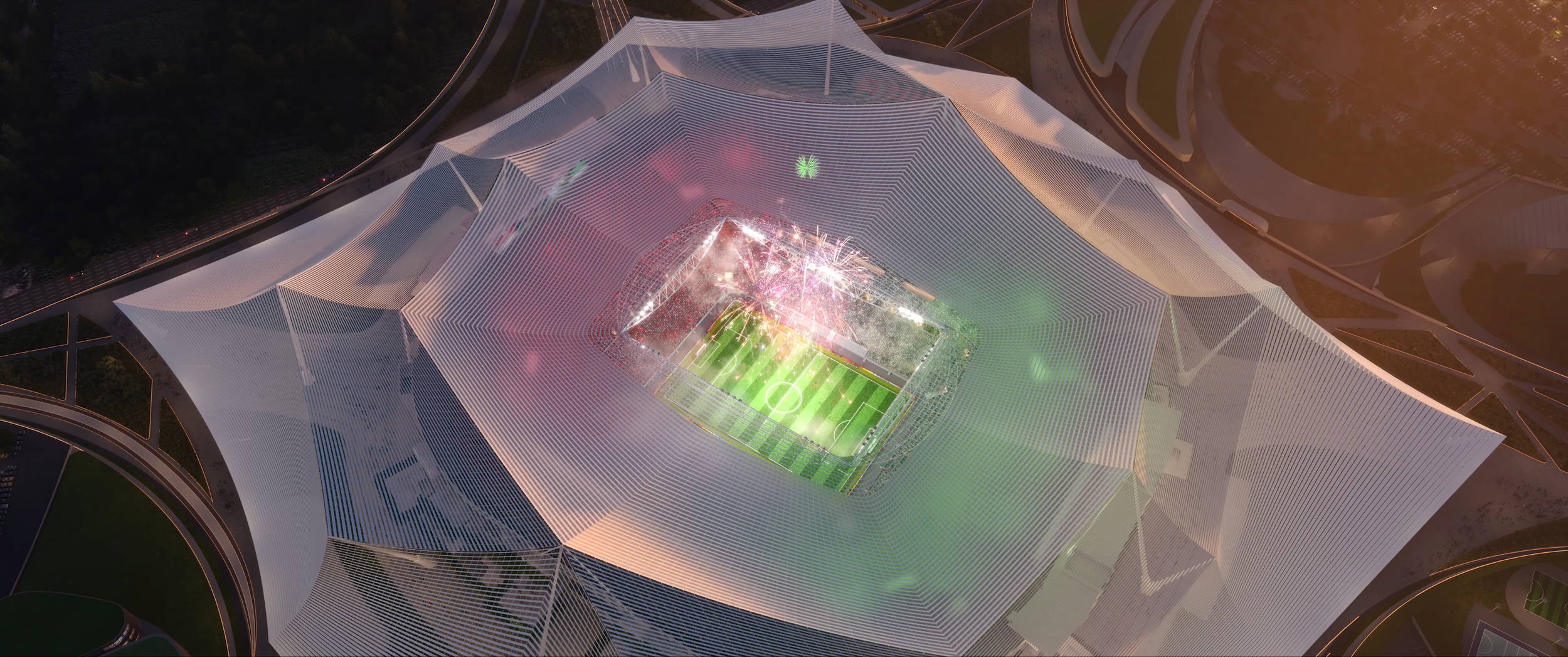
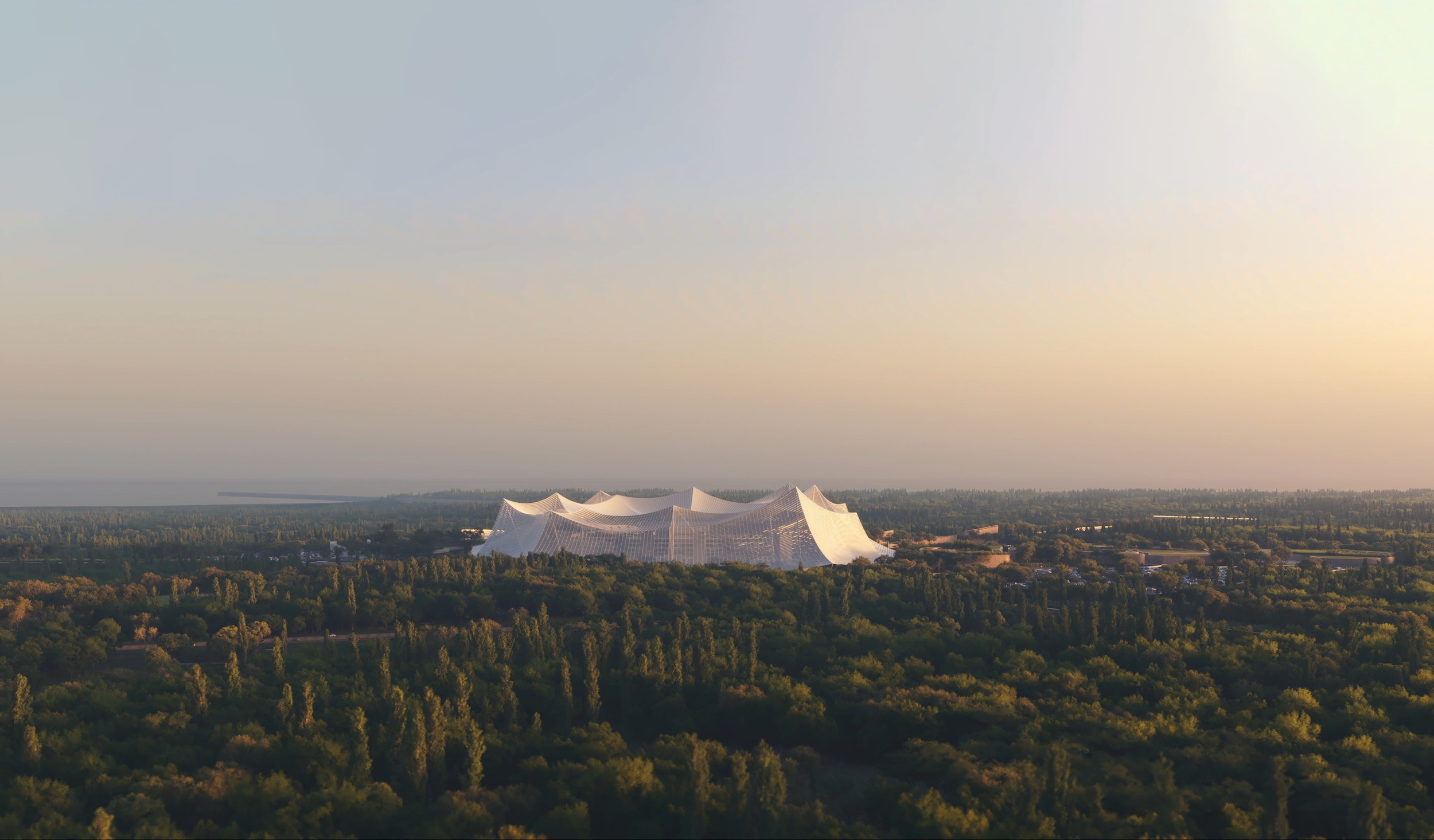
Une grande tente légère, déployée vers le ciel, recouvre l’ensemble du stade et ses abords marquant une figure spectaculaire dans le paysage. Fabriqué à partir d'un maillage de câbles, soutenant des brise-soleil en aluminium, la tente est soutenue par un anneau de 32 escaliers, créant des portiques monumentaux qui soutiennent le grand déambulatoire. Au niveau du sol, sous la tente, une multitude de jardins d’acclimatations et d’espace d’activités complète cette atmosphère naturelle.
Le stade sera aux normes pour les compétitions de la FIFA, avec la possibilité d’accueillir la finale de la Coupe du Monde de la FIFA 2030, à la suite de la désignation du Maroc comme co-organisateur du tournoi aux côtés de l'Espagne et du Portugal. Il servira également de domicile aux deux clubs locaux.
En collaboration avec Populous.
Groupement : Maffeis Engineering, ME Engineering, Rider Levett Bucknall.
GSH
Hassan II Stadium
Benslimane, MA
FIFA 2030 World Cup Stadium - 115 000 capacity
ENG |
The Grand Stade Hassan II, with a 115,000-capacity, is projected to be the largest football stadium in the world.
The Grand Stade de Casablanca offers an architecture deeply rooted in its site, engaging in dialogue with the millennia-old culture of Morocco. It embodies the tradition of welcome and hospitality that is so distinctive to us. The project draws on the concept of the “Moussem,” a major festive gathering place, and uses the archetype of the tent—this primordial figure of architecture—as the starting point for inventing a powerful and unique architectural presence.
The Grand Stade is conceived as a landscape-building: open, generous, and sustainable.
A vast, lightweight tent, unfurled toward the sky, covers the entire stadium and its surroundings, creating a spectacular landmark within the landscape. Made from a network of cables supporting aluminum sunshades, the tent is held up by a ring of 32 stair towers, forming monumental porticoes that support the grand concourse. At ground level, beneath the tent, a multitude of acclimatization gardens and activity spaces complete this natural atmosphere.
The stadium will be fully compliant for FIFA competitions, with the ability to host the final at the FIFA World Cup 2030, following Morocco’s naming as joint hosts for the tournament alongside Spain and Portugal. It will also serve as the home of two local clubs.
In collaboration with Populous.
Design Team: Maffeis Engineering, ME Engineering, Rider Levett Bucknall